December 9, 2025
Harding+ charts a course for growth: guest experiences, brand partnerships drive FY2024 success
In a recent interview with GTR Magazine, Commercial Director Linzi Walker emphasized how the company is evolving from conventional retail outlets into experience-led spaces

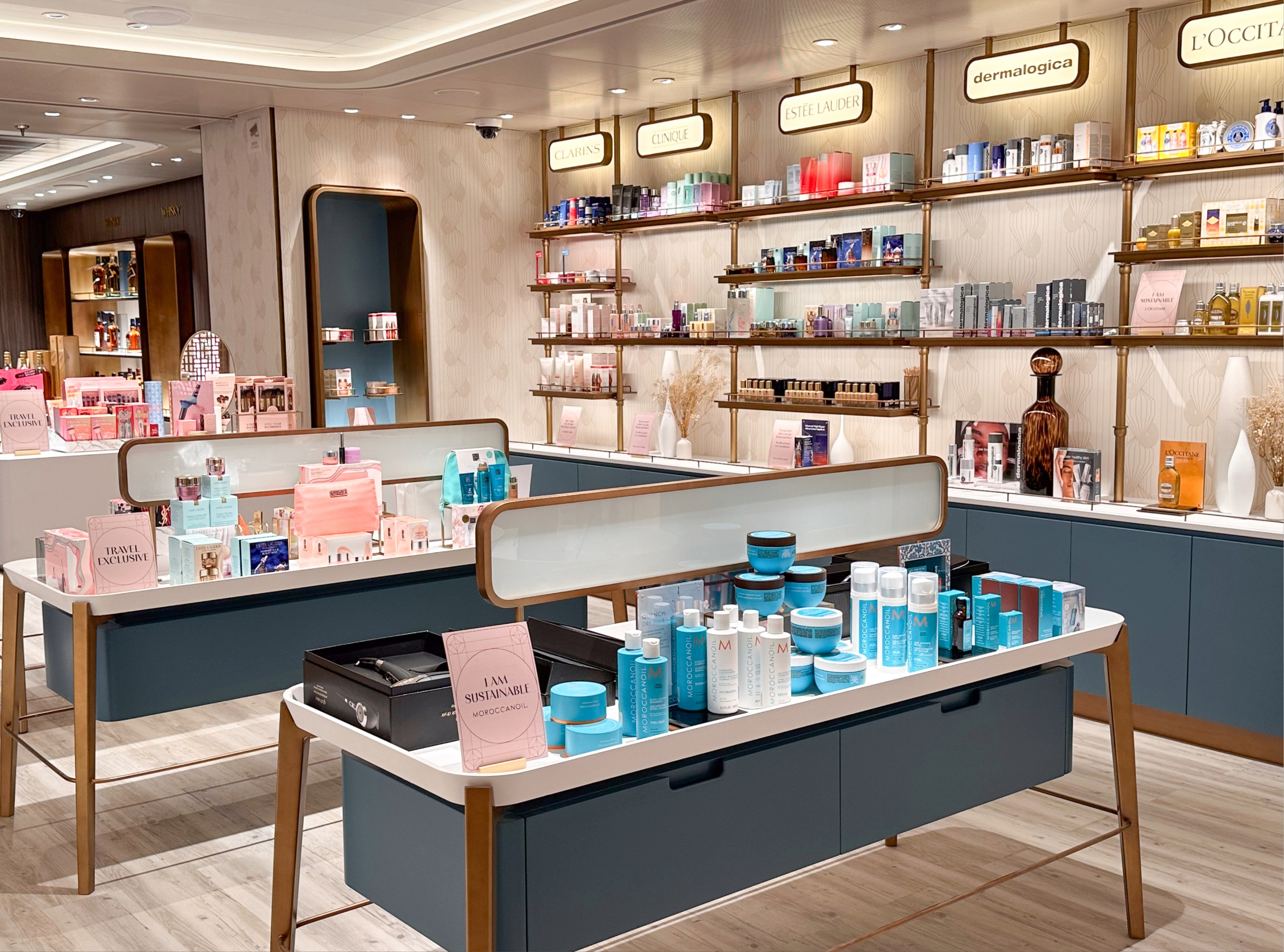
In FY2024 Harding+ delivered a robust performance — reporting revenue of £305 million (US$406 million), up 3.1 % year-on-year, and returning to profit, with profits before tax climbing to £4.7 million (US$6.3 million). The company processed six million guest transactions across its 300 shops on 82 cruise ships, reflecting strong demand for onboard retail as cruise occupancy continues to surge and a record number of new ships are due to market in coming years.
At the heart of this success is a focused commitment to enhancing guest experiences at sea. In a recent interview with Global Travel Retail Magazine, Commercial Director Linzi Walker emphasized how the company is evolving from conventional retail outlets into immersive, experience-led spaces that integrate seamlessly into the broader cruise experience — from shops to bars to lounges — ensuring that shopping becomes part of the holiday narrative, not an afterthought.
Guest-first retail
“Guests treat cruise as indulgence-time,” Walker explains, noting that categories such as beauty, fragrances, and spirits have seen disproportionate growth because passengers view them as part of the overall leisure and pampering of a holiday. This attitude helps explain the rising demand for indulgent and experiential retail onboard Harding+’s cruise partners such as P&O Cruises and Cunard.
Harding+’s recent refits and store upgrades reflect this shift. On newer ships like Cunard’s Queen Anne and Sun Princess, retail spaces have been reimagined to feel more like boutiques or lounges than traditional duty free shops. As previously reported, a ‘Cabinet of Curiosities’ showcase on the Queen Anne fused iconic British jewelry brands with immersive storytelling and artistic display, bringing retail into the same aesthetic world as entertainment and hospitality.
Walker notes that this integration of retail, leisure and sense of place is especially effective when shopping links to other onboard experiences, such as enjoying a cocktail in the bar and then browsing for spirits in the shop. Or there’s a sense of personalization from developing a unique fragrance in a workshop session and then taking it home as a holiday keepsake. That cross-channel synergy turns retail into part of the journey itself.
Growth categories: watches & jewelry, fragrance, spirits
Among the categories that have been performing particularly well, Walker highlights watches & jewelry, beauty, fragrances and spirits as key growth drivers, often outperforming broader categories thanks to the unique opportunities that cruising presents. On cruise ships, guests have time to browse, compare and consult with onboard experts, which is a luxury that is diminishing in airport shops, adds Walker.
She emphasizes that watches and jewelry have benefited from travelers’ time and desire to make considered purchases. At sea, there’s the space, the calm and the advice — which together create an environment conducive to higher-value luxury retail. That’s amplified when complementary categories such as beauty and fragrances are treated as part of self-care and holiday indulgence. Spirits, meanwhile, tie directly into the holiday mood, with personalized bottles, exclusive small-batch whiskies and cocktails linking shop purchases to bar experiences and memories made onboard.
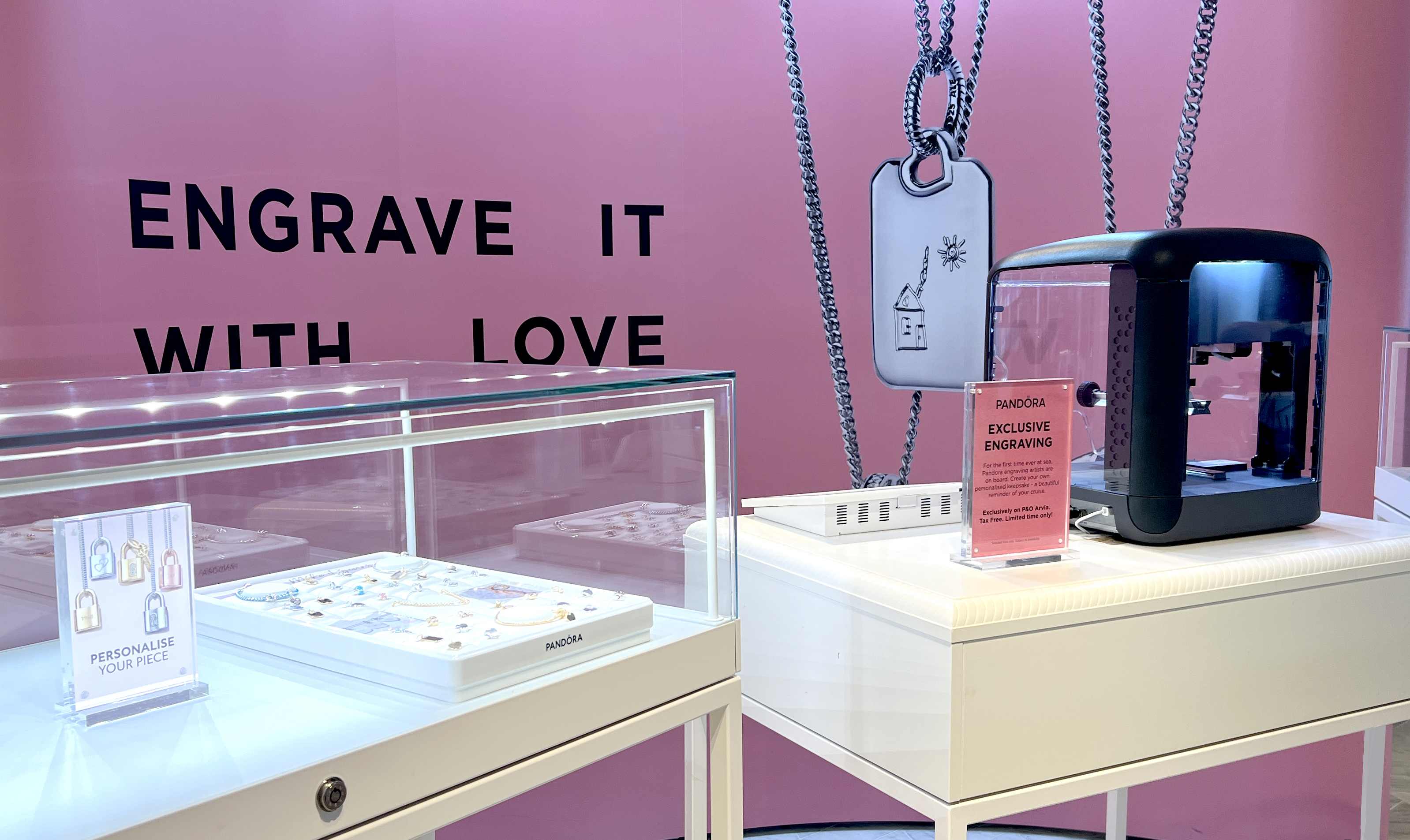
On jewelry, Walker highlights the particularly strong momentum behind the company’s partnership with Pandora, which has been strengthened by the introduction of engraving machines on select ships. “We launched worldwide with our fantastic Pandora engraving machines on board… the guests have absolutely loved it,” she says. The machines allow guests to create personalized keepsakes and pair their jewelry purchases with memories from the voyage — a combination Walker calls “really magical.”
In fragrances, Harding+ has leveraged its long-standing relationships with beauty houses to bring high-profile launches to sea at the same time as on land. Walker points to the success of Chanel’s Chance Eau Splendide launch in 2025 as a milestone moment. “It was a lovely brand to position our first at-sea activations for Chanel… we launched that at the exact same time as it was available globally,” she explains.
These initiatives — from personalization in jewelry to synchronzsed global fragrance launches — help fuel a broader shift toward experience-driven retail. Guests increasingly seek products that allow them to capture a moment or feel immersed in a brand story, and Harding+ is meeting that expectation with activations and pop-ups that merge seamlessly with the cruise environment and itinerary.
AI–driven supply chain
A key enabler behind Harding+’s success, Walker points out, is the company’s new AI-based supply chain framework, implemented in partnership with Dataviva. Since mid-2023, this AI-driven demand-forecasting and inventory-management system has redefined what supply chain agility looks like at sea.
The results have been impressive: out-of-stock rates on key lines have fallen by around 60%, while inventory levels have remained stable or reduced, helping to cut waste and lower “pallet miles.” This enables Harding+ to deliver the “right products, in the right quantities, at the right time, anywhere in the world,” as Walker puts it.
Crucially, that operational backbone frees shipboard teams from much of the administrative burden, allowing more time for training, guest interaction and delivering high-touch, personalized service. It also supports the retailer’s sustainability ambitions, by reducing reliance on emergency airfreight and improving logistics efficiency.

Changing cruise demographics
Harding+ has positioned itself as a leader in a rapidly evolving cruise-retail ecosystem. The broader industry is benefitting from strong tailwinds: rising cruise passenger numbers, more family-oriented and multigenerational travellers, and a younger average guest age (around 46), all of which expand the appeal of onboard retail beyond traditional core demographics.
On the retail execution side, Harding+’s emphasis on data-driven insights — including 30,000 guest surveys annually, demographic data, port destination trends, and historical purchase behavior — allows tailored assortment and store design per ship and itinerary.
The company’s commitment to experiential retail, immersive shopping activations and aligning retail strategy with the overall cruise holiday experience has set a benchmark for others in the sector. There is also the retailer’s ability to tap into zeitgeist partnerships – the Pandora engraving machine pop-ups proved such a success, Harding+ has extended the relationship to roll out the concept to more ships.

Innovation mindset
For Walker, the future of cruise retail lies in creating memories — turning a bottle of perfume, a watch or a bottle of bespoke spirits into a tangible memento of the voyage. She argues that this requires more than product: it demands curated experiences, immersive retail spaces, personal service and, importantly, a supply chain capable of supporting that ambition without compromise.
With its AI-powered logistics, guest insight capabilities, and immersive retail strategy already delivering growth in key categories, Harding+ seems poised to ride the next wave of cruise retail growth. As cruise continues to draw newer, younger, and more diverse audiences, the company is betting that the modern cruise guest expects more than just shopping, they expect an experience.
If FY2024 is any indication, Harding+ is already delivering.